
Helen
As we chat together about this idea of Guest and Host, and the wider dynamic of hospitality, let’s look at how it relates to God, and how we’ve experienced the issue within our churches.
Roy
Okay, I think it is related to the very nature of God.
And the very desire of God to influence the way the world works.
Helen
Demonstrated by God as our host who’s given us everything in the first place.
Roy
Absolutely.
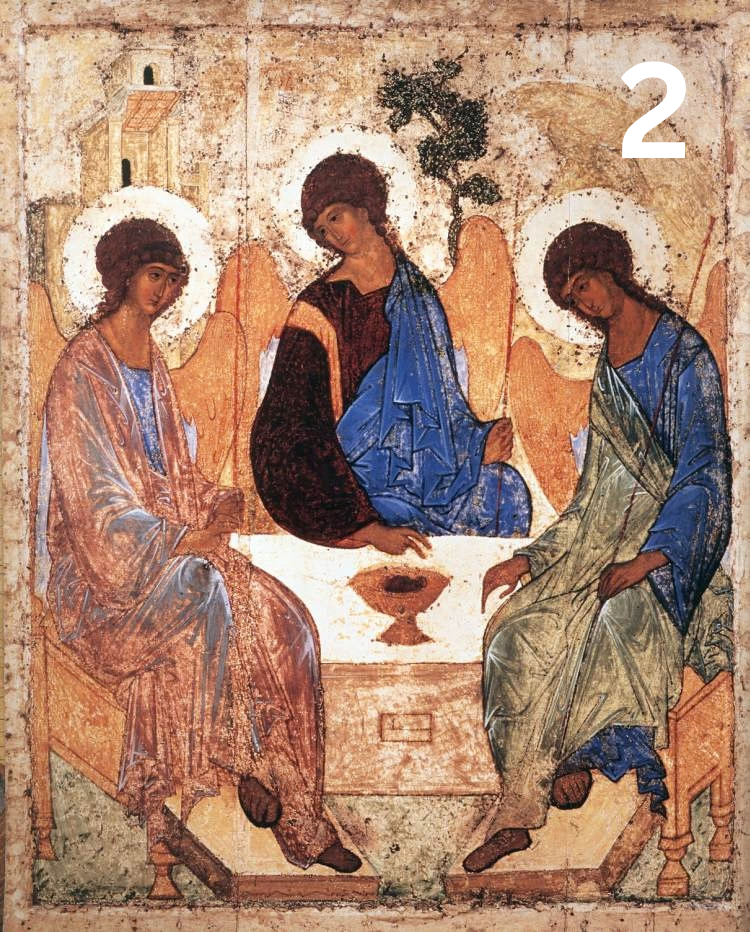
I was out for a walk this morning and I thought about how I imagine myself as a guest in the world God has created and invited me to participate in, to dwell in. And I know that I have some responsibilities under God as a host, but I feel, essentially, that I’m a guest.
For me, there’s something important about the interaction between guest and host – of being both the offerer and the receiver of things. That is part of the DNA that God wants to live by, so I see a connection and a relationship between host and guest, but the lines get blurred!
For example, in the Gospels, you’ve got Jesus welcomed as the guest in somebody’s home. But then he does things that almost make him the host, and I think there’s a kind of interplay going on here that, to me, reflects something of the very nature of the giving God.
Julie
I agree with all that you’ve said. Speaking more as a practical theologian, thinking around what church is for and what church does, another reason I would say we should be talking about this is that I think it challenges a lot of assumptions we make as Christians.
Many prayers and sermons and hymns focus on ‘sending us out to make the world how you want it made, God’ and, we as ‘church’ are the ones with the power; the ‘host’, and that host role is overemphasised, I think, in a lot of traditional church language and culture.
Bringing about the kingdom feels like we’ve got the answer and the knowledge of what it should be, and so as we invite people in to church, we’re getting them in to teach them what they should be doing. And I think this theology brilliantly and appropriately challenges that. So from a practical, as well as a theological standpoint, I think the practical outworking is also really key.
Helen
I agree with you, Julie. And I think that the way the church sees itself as the host has a profound impact on the way people outside see church.
For instance, If a person is invited to go to church to do something like an Alpha course: they go into the church, amongst a group of people who may be perceived as thinking they have all the answers; who are going to impart to you the information that you, as a visitor, need to make you a better person. And you have very little say or input into that, apart from to consume and interact with the videos you’ve been shown.
Julie
The power of the guest is to get up and leave though, right? The power of the guest is to say “no, I’m going!”.
And although that is the power the guest holds in that kind of scenario, I wonder how easy it is for people to wield that power when they’re in a social setting that has been set up to be polite? They hold power, but can they exercise it?
Helen
So at the very least, they have the power to not come back!
Roy
But that’s a rubbish conclusion. That’s not God’s purpose for church, is it? That we come in once and then decide, “ah, never again”! That’s not the way God wants it to be, is it?
Helen
Well on the flip side, it’s not always like that when visitors visit churches. For instance, when my children were very young, my friend and I used to take them to a playgroup, which was run by a church. At that time I wasn’t a Christian. Having got to know some of the people in that playgroup I was impressed by the relationships between these church people. I remember saying to my friend “I could really get into this whole church thing. Look at how these people care for each other, and how much they like each other, and how, when somebody had a baby, the rest of the church would give them meals. I could really be a part of something like that if it wasn’t for the fact that you have to believe in God!” I was aware that here were a group of people who cared for one another and who wanted to care for us. I wouldn’t have recognised their hosting dynamic, or my status as guest, but I knew I was on the edge of something hospitable and warm and I wanted to be within it. This was an example of church hosting done well.
Julie
And a shout out for small churches in that because it’s often those that do that well.
Roy
Absolutely. I was just going to say the same thing. I think if you visit the church community at Portrack, they would say that’s why they have lots of people who actually don’t really know where they are faith-wise, but they are cared for, loved, and feel that they belong somewhere.
Craig
That’s what our church became as well. I always liked the phrase “come with us and we will do you good”.
Roy
The ladies from your church who came on our retreat, Julie, they would certainly say that about your church wouldn’t they?
Julie
Yeah. They are an example, really, of where people come along, and instead of feeling like they are the guests, and being hosted by the people with power, they actually have come in and been welcomed and made to feel that there’s equality, and that there’s a giving and a taking, and a learning from and a giving to.
That’s really interesting because those two ladies were baptised in July last year and one is now the treasurer of the church, and one is now also a deacon with quite a lot of responsibility, and I have felt quite protective of them, as in, “don’t burden them, don’t give them too much to do”.
But now I’m thinking that’s okay, right? They’ve felt called to those roles, and they’re perfectly equipped to do those roles. I don’t need to protect them in that way because it’s about giving them power; they’re no longer guests, they’re hosting.