Simon
Joshua, it’s wonderful to have you here. You have an honoured surname in the world of the Collective, but we’re talking to you because of a fascinating article you have written which dovetails with a theme we have been exploring together. You’re currently in Germany, so just tell us a little bit about your life, what you’re up to, and who you share life with.
Joshua
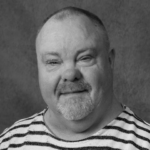
Thanks, Simon. It’s good to join you and Craig, and greetings from Berlin, or more precisely from the Theologische Hochscule in Elstal, where I currently work as Professor of Mission Studies and Intercultural Theology at the German Baptist University. I’m a bit of a cultural exile here because I’m originally from the northeast of England and, yes, I am related. Roy is my dad. I grew up in Northumberland, and influenced by the spirituality and ethos of the Northumbria Community. I then had the opportunity to move to Oxford, where I spent three years studying modern history at Regent’s Park College. This was followed by my Master’s degree at the International Baptist Theological Seminary, which is where I met Craig all those years ago, and after IBTS, I wrote my doctoral studies at Trinity College in Dublin.
It was during the last year of my PhD studies that I visited Ukraine for the first time, and I fell in love with the country and its people. It’s such a remarkable country. I also fell in love with a particular girl who became my wife. And now we’re living in Germany together with our little boy, Thomas, who is at kindergarten where he’s learning German, and he is already correcting my German grammar!
I said that we’re in Berlin, but we’re actually in the Bundesland of Brandenburg, which was in the formerly communist East German Republic. As a result of this Soviet legacy, this part of Europe is statistically the most atheistic part of Europe. Up to 75% of the population here confess atheism or secularism as their creed. So it’s quite a challenging environment to do ministry, but there’s a lot of good work going on here. And it’s a real privilege to work at this Baptist Theological University, to be engaged in mission, to lead workshops and teach on the programmes that we offer here at the Theologische Hochscule. I’m also very involved in my local church here in Spandau in Berlin, and I’ve kept in touch with Ukraine as well. After my time at Trinity College in Dublin I got married to my Ukrainian wife, and we moved together to the city of Donetsk. And it was there that my theological convictions started to shift.
Simon
Thanks for that great introduction Joshua. The reason we’ve wanted to chat with you is because we’re currently going through the Beatitudes and are wrestling with Jesus’s ethical teaching, asking ourselves whether he is presenting us with an ideal that people can’t ever live up to. There are well-known biblical scholars from different theological perspectives who have remarked that no one can be expected to live like this. So evangelicals might say the Beatitudes exist to prove to us what terrible sinners we are, and yet we feel drawn to the Jesus way of life. And, obviously, Jesus lived in a time of great violence, of political oppression and of occupation. So, while we’re all nice and safe in the UK, the people who first heard these teachings weren’t. Life was nasty, brutish and short. And we know that parts of Jesus’ teaching were put into an early version of a catechesis, so living these teachings might be hard but his hearers took them seriously.
We’ve read an article that you’ve written in an Anabaptist journal. Anabaptists are famous for their insistence that following Jesus is more important than worshipping him, and so the ethical teaching of Jesus takes primacy. So the fact that you’ve written in that journal makes me assume that you would see yourself as being part of that stream of thought. And yet, as you’ve already indicated, being on the front line of a very gruesome colonial-type war seems to have shaken the dust off those beliefs. It has tested them in the fire. Can you tell us a little bit about how the war has challenged your beliefs.
Joshua
Yeah, sure, Simon. I would perhaps want to push back, or perhaps gently correct, the characterisation that this Russian invasion of Ukraine is a colonial war. I don’t think it is that. It is not a territorial dispute. It’s not even a dispute between an empire and a sovereign nation state. I think it’s fundamentally a genocidal campaign aimed at the mass annihilation or extermination of the Ukrainian people.
But, on the way my theological position has shifted: I was nurtured in the Anabaptist tradition, deeply influenced by pacifist thinkers like Yoder and Hauerwas. And I think, up until about 2013 or 2014, I was a staunch advocate of pacifism. It wasn’t just an intellectual position. I actually thought that this was a fundamental part of my identity as a Christian. I’ve continued to cherish Anabaptist peace theology, and I think it makes a really serious and formidable contribution to debates around the ethics of war – the need to emphasise enemy love and non-violence etc. – but the events of 2014 fundamentally shifted my position and pulled me into what I might describe as a convictional crisis.
I mentioned just now that, after graduating from Dublin, I moved with my wife to the city of Donetsk in eastern Ukraine. And I worked there as a missionary teacher. I was teaching at Donetsk Christian University – a large Baptist seminary in eastern Ukraine – and learned the local language and was thoroughly immersed in the culture. I was teaching mission and theology and preaching regularly.
Towards the end of 2013 i was called back to the UK to take up a position as a tutor at Spurgeon’s College and a few months after I had returned to the UK, the Maidan demonstrations engulfed Kyiv. The Revolution of Dignity which led to the toppling of the corrupt Russian-sponsored puppet regime in Kyiv was the means by which the Ukrainians tried to become a self-governing, democratic, sovereign nation. And, in retaliation, the Russians invaded Crimea, and then the Donbas region which was where I had been working up until 2013. And you have to imagine the scene. It was July 2014, just after the Russians had shot down that Indonesian plane over eastern Ukraine. It was a beautiful summer’s day, blue skies and sunshine. And the Russian soldiers turned up at the campus of the Baptist seminary with their rocket propelled grenades, their AK-47 rifles, and about a dozen armoured personnel carriers, and they forced out all of the remaining staff and students at gunpoint and threatened them with execution if they didn’t leave the premises immediately. So all our friends and former colleagues had essentially been deprived of their whole livelihoods. Many of them had houses and accommodation on the campus, and that all went in an instant. And the Russians converted this Bible seminary into a military installation for the Russian paramilitaries, which also became a torture interrogation centre. So the classrooms where I used to teach the Bible to students from the former Soviet Union, became interrogation chambers.
So my thinking about theology and pacifism wasn’t just a theological debate for me any longer. These were people that I knew. These were students that I had taught, students whose names I knew individually. And the Russians had desecrated the places where I’d taught, where I’d worshiped, and the place I had called home. And I think the stark brutality brought home to me that the present reality couldn’t be reconciled with the pacifist ideas that I’d maintained intellectually, and inherited from my upbringing. I had to ask myself what enemy love really means in this situation. I started to realise that laying down arms for the sake of securing a so-called peace is not the answer. In fact, it’s a form of complicity with evil. And then the full scale invasion of February 2022 only intensified this conviction.
Between 2014 and 2022, my wife and I had founded a new missional network, which we converted into a charity in the UK. We called it Dnipro Hope Mission, and we created a network with bilateral partnerships between Ukrainian churches and churches in the UK. I made regular trips to visit the Ukrainian ministry partners in Ukraine, and I saw things that I can never un-see. Let’s just say that, walking through burns units where Ukrainian soldiers were being treated, I saw the full horror of war and heard the most terrible stories of massacres, of systematic torture, of children being abducted and of women being raped by the Russian soldiers. So, even before the full invasion, I realised that what Russia was engaged in against Ukraine was a campaign of ethno-national annihilation, or even genocide. And all of this caused me to fundamentally rethink what it meant to be a follower of Jesus and what it meant to respond in a Christ-like way to the situation. And the answer was certainly not one of absolute pacifism, the absolute categorical rejection of violence.
It wasn’t just me who came to this conclusion. I have Anabaptist Mennonite friends in Ukraine who’ve also been on a theological journey. And you mentioned the article that I wrote for the Anabaptism Today journal, in which I cite the example of one of my best friends in Ukraine. I called him Pastor M. And Pastor M was a Mennonite pastor and, if the Mennonites are known for anything, it’s for their commitment to unconditional pacifism and non-violence. And that was his position before the war. When I saw him more recently he was dressed in his combat fatigues. He signed up for the army and is now a commissioned officer in the Ukrainian army, serving as a chaplain on the front line. I asked him how he reconciled his Mennonite Anabaptist pacifist convictions with his military service. He said that ‘Putin has cured me of my pacifism’ which became the title of my article. So my own theological journey has also been reflected in the experience of my Ukrainian friends who now realise that the injunction to turn the other cheek doesn’t apply to situations of genocidal violence like our Ukrainian friends are confronted with at the moment.
To be continued…