
Julie
I’ve been thinking further about how hospitality relates to immigrants and poverty, and I’ve realised that honour is linked to hospitality. So take the example of what happens when you are hosting someone in your home for a meal. When we get ready to have guests we show them respect by cleaning the house, finding out what their preferences are and cooking a meal that avoids the ingredients they wouldn’t choose to eat. All this demonstrates how much honour we are inferring on our invited guest.
What would it look like if we chose to welcome immigrants with that kind of honour? What does that look like? And, as a guest, when you’re invited into a space like that, and you are honoured in that way, surely you’ll respond well? As Craig has described, people who are given a space to live in are grateful. They respond positively, and relationships are formed.
I just feel sad about the way the immigration issue is playing out in our country. I wonder what would happen if we honoured our guests. And as you say, Helen, we would learn from them and allow ourselves to be changed and grow. How different the world might be.
Craig
I think the atmosphere would be very different. And let’s remember that the areas that are most against immigration are the areas where there’s mostly very little immigration. So it’s fear of the unknown rather than fear of the known. It’s the monocultural areas too our country that tend to have Reform councils and MPs.
Roy
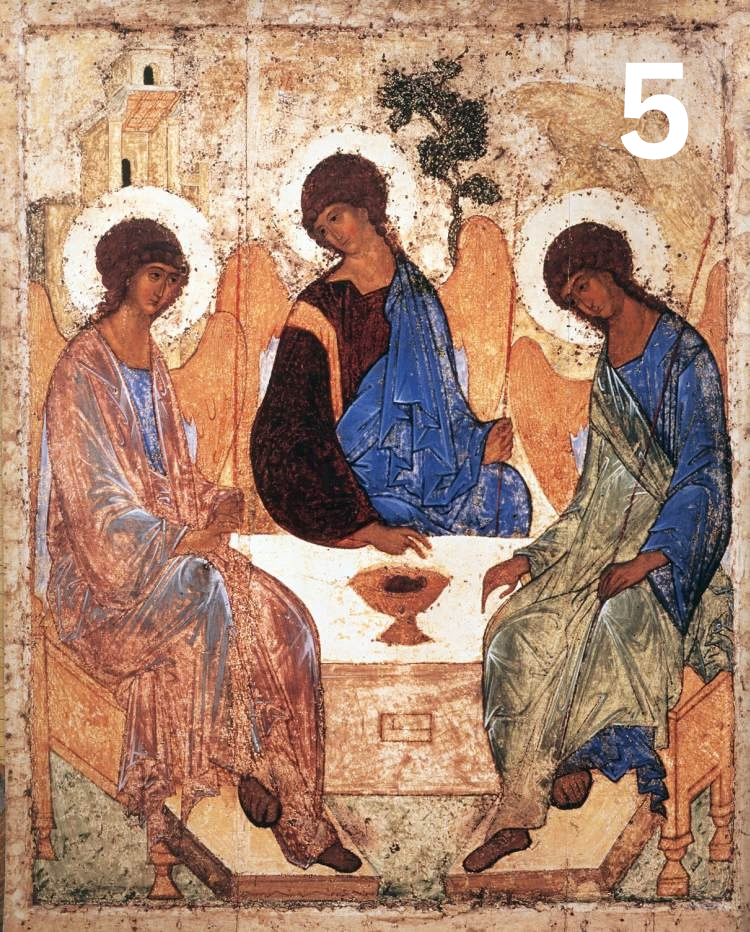
I’m thinking of Genesis 18 and Abraham and Sarah welcoming the three strangers and discovering that in their act of hospitality to strangers they’re actually receiving something from God.
So yes Julie, I think, if we could really honour each other …
I think about Arnhem in the Netherlands, where people were terrified because the city council decided to take in 4,000 Syrian refugees back in, was it 2013, 2014?
But instead of operating out of fear. They chose to welcome, show them compassion and hospitality. And 10 years on, coming out of COVID, they discovered that the local economy was thriving, and the city was much more culturally diverse, but the better for it.
It turned out that far from being a threat to Dutch society, actually, the immigrants were a massive enrichment of Dutch society. And it wasn’t just that they were engineers and medics and teachers and skilled people. They brought something more. They brought some of the family values that had been lost to parts of the society of Arnhem. Like just spending time together which had been lost in the pursuit of consumerism.
Craig
Definitely. I remember a really interesting program on Radio 4 just as Brexit was unfolding. They were interviewing Europeans who were leaving the country. And there was one particular Polish woman who had been employed as a care worker here. She said she was so pleased to go home because she couldn’t believe that we allowed our elderly people to go into homes instead of caring for them ourselves. She said that as a Catholic country they would never do that for their elderly people. She was questioning our cultural values and the way we demonstrated care to our elderly.
Roy
Yes, I remember a long time ago when I worked as a care worker, and was explaining to some Belgian friends of mine what my job was. They were so surprised that this was even a job in our country. They couldn’t understand the idea of putting your elderly parent into a home. Part of their Catholic and cultural values was that family was very important and they just wouldn’t do it.
Helen
Of course we should point out that there are all kinds of reasons that people need additional nursing care, and we’re not making a value judgement! This has just been our experience of hearing the opinion of others.
Craig
Yes Helen, that’s an important point. I wouldn’t be able to care for my parents, for example. And there will be many very good reasons why caring for elderly parents at home may not be the best arrangement for all concerned.
Helen
I wanted to step back a little bit. We were talking about our experience of immigrants coming into the country and how we treat them. I was reading about 2011 when many Syrians migrated into Turkey. The Turkish people described the Syrians as guests. However, by referring to them as ‘guests’ the Turkish people were actually reinforcing the temporary and subordinate status of the Syrians because they were able to decide how long the guests could stay, where they could stay while they were in the country, and everything that was expected of them as guests.
And the effect this had on these guests, rather than honouring them, was actually to make them compulsory guests with no power or agency and it increased their vulnerability which made them just want to go home more. Being a guest is not always a good thing, I guess.
Whilst that doesn’t equate exactly to what we’re seeing with the protests against immigration here, there is something in that whole idea that if people are going to come into our country, then they will do so according to our rules: They will go to the places that we say they can go to, and they will do the things that we say they can do. And if we want them to leave, then they will have to go.
There’s a hardness and a coldness, and something really quite unpleasant about that whole concept. It certainly doesn’t appear to be very hospitable! But maybe that is the point.
Roy
The starting point for me is that scripture constantly and repeatedly connects love of God with love of neighbour and the welcoming of strangers. Israel was told to love the foreigner because they themselves were once foreigners.
And Jesus identified himself with the hungry, the stranger, the sick, the imprisoned. In Matthew 25 he tells us “Truly I tell you, whatever you did not do for one of the least of these, you did not do for me.”
Craig
Christians are given a crystal clear theological posture to take. We are to see people as beloved of God, and not as threats or burdens. They are not statistics. Yes, they’re strangers to us, but they are also neighbours in whom Christ may be encountered. We may be entertaining angels unawares. I’m not sure what it means, but I find the thought absolutely fascinating.